Geotechnical laboratory testing forms the analytical backbone of any successful construction or civil engineering project in Boise. This category encompasses the physical and mechanical evaluation of soil and rock samples to determine their engineering properties, such as strength, compressibility, permeability, and classification. Without precise laboratory data, foundation design, slope stability analysis, and earthwork specifications would rely on guesswork, leading to potential structural failures or costly over-design. In a growing urban center like Boise, where residential subdivisions, commercial developments, and public infrastructure are constantly expanding, laboratory testing is not just a regulatory formality—it is a fundamental risk management tool that safeguards both public safety and private investment.
Boise’s unique geological setting makes laboratory analysis particularly critical. The city sits at the northern edge of the Treasure Valley, where the Boise River has deposited layers of alluvial sediments, including silts, sands, and gravels. Beneath these surficial deposits, the region is underlain by the Idaho Batholith, a massive granitic formation, along with basalt flows from the Columbia River Basalt Group. These diverse parent materials create highly variable subsurface conditions. For instance, near the river corridor, loose, saturated granular soils may be prone to liquefaction, while expansive clay layers, derived from weathered volcanic ash, are common on the surrounding benches. A comprehensive soil mechanics study is essential to characterize these materials and predict their behavior under load and changing moisture conditions.
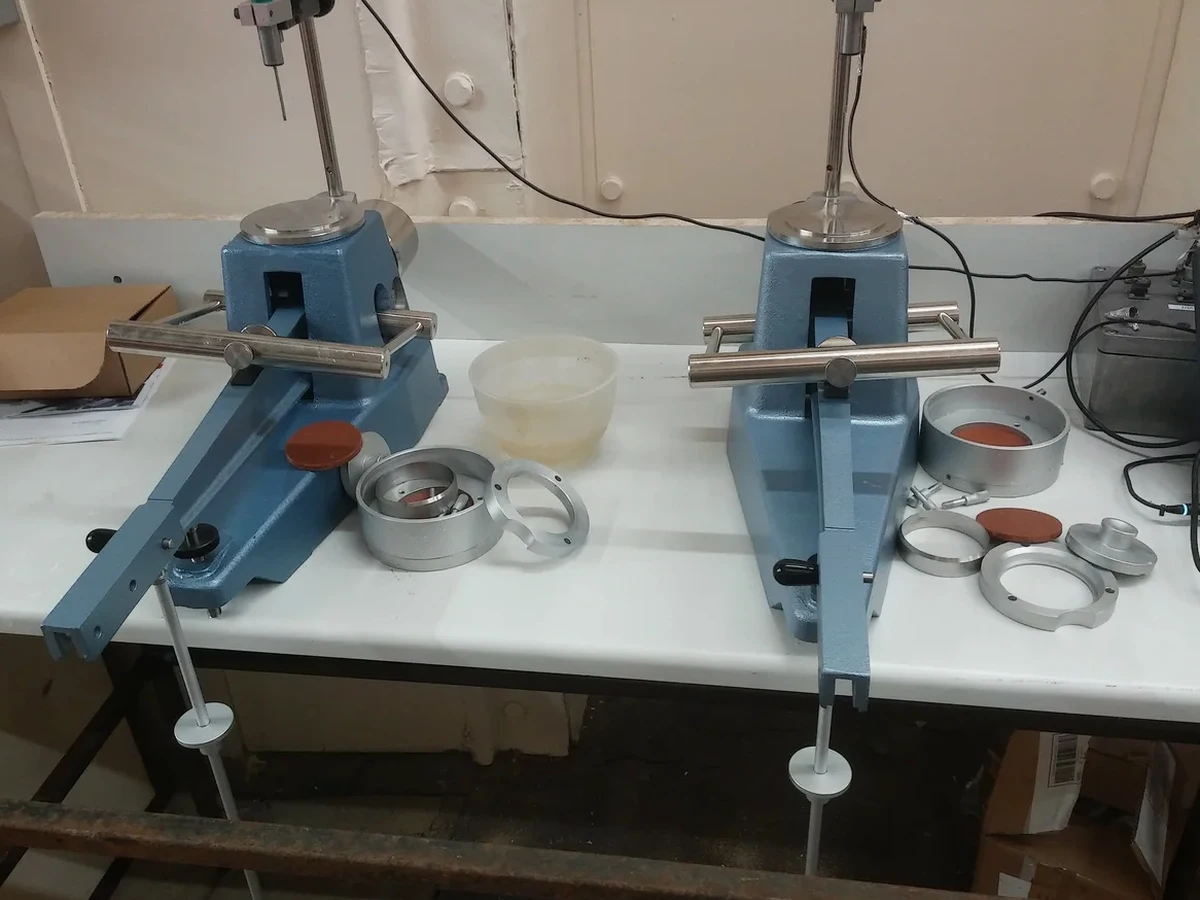
Laboratory testing protocols in Boise must adhere to stringent national standards, primarily those established by ASTM International and AASHTO. The governing code for building projects is the International Building Code (IBC), as adopted and enforced by the City of Boise’s Planning and Development Services department. The IBC mandates a geotechnical investigation, which relies heavily on laboratory test results, for any structure requiring a permit. For transportation projects, the Idaho Transportation Department (ITD) specifies its own standard specifications, which frequently reference AASHTO T-series test methods. A common requirement for roadway subgrade evaluation is the laboratory CBR test, which directly informs pavement thickness design according to ITD criteria. These regulations ensure that laboratory data is consistent, reproducible, and legally defensible, providing a uniform basis for engineering design across the region.
The types of projects in Boise that demand rigorous laboratory testing are diverse. High-rise buildings in the downtown core require advanced triaxial testing to determine shear strength parameters for deep foundation design, often employing a triaxial test to simulate in-situ stress conditions. Residential developments on the foothills necessitate swell-consolidation testing and Atterberg limits analysis to mitigate the risks associated with expansive soils. Infrastructure projects, including water treatment plants, bridges, and retaining walls, depend on direct shear and consolidation tests to assess bearing capacity and settlement. Even smaller-scale projects, like a retaining wall replacement, benefit from a simple unconfined compression test to verify the stability of cohesive fill materials. The laboratory provides the objective evidence needed to make informed, economical, and safe engineering decisions for every scale of work.
Available services
Unconfined compression test (UCS)
→ Ver detalleOedometer consolidation test
→ Ver detalleDirect shear test
→ Ver detalleLaboratory CBR test
→ Ver detalleProctor test (Standard or Modified)
→ Ver detalleTriaxial test
→ Ver detalleSoil mechanics study
→ Ver detalleAtterberg limits
→ Ver detalleLaboratory permeability test (falling/constant head)
→ Ver detalleCommon questions
What is the purpose of a geotechnical laboratory testing program in Boise?
The program quantifies the physical and mechanical properties of subsurface materials to inform foundation design, slope stability, and earthwork construction. In Boise, where soils range from river alluvium to expansive clays, this testing is crucial for predicting settlement, shear strength, and potential soil behavior changes, ensuring structures comply with the International Building Code and withstand local geological hazards.
How do Boise's local soil conditions influence the selection of laboratory tests?
Boise’s diverse geology, including alluvial sands near the river and expansive volcanic-derived clays on the benches, dictates the testing suite. Liquefaction-prone sands require dynamic triaxial tests, while expansive clays necessitate Atterberg limits and swell-consolidation tests. A careful field investigation guides the selection of laboratory procedures to target the specific risks present at each site.
Which standards and codes govern geotechnical laboratory testing for Boise projects?
Testing methods follow ASTM International and AASHTO standards. The City of Boise adopts the International Building Code (IBC), which mandates geotechnical investigations based on laboratory data. For public works, the Idaho Transportation Department (ITD) standard specifications apply, often requiring AASHTO-classified tests like the laboratory CBR for pavement design.
When are laboratory tests required during the construction process in Boise?
Laboratory testing is essential during the design phase to establish engineering parameters and again during construction for quality control. Earthwork projects require Proctor tests to verify compaction, while concrete and asphalt testing ensures material compliance. This ongoing testing confirms that field conditions and materials meet the assumptions made during the design phase, as required by the IBC and project specifications.