Slope engineering in Boise encompasses a comprehensive suite of geotechnical services aimed at understanding, analyzing, and mitigating risks associated with natural and constructed slopes. From the Boise Foothills to the river terraces along the Boise River, our terrain presents unique challenges that demand specialized attention. This category brings together critical disciplines including soil erosion analysis, stability assessments, and reinforcement design to protect infrastructure, property, and lives. Whether you're developing residential lots in the Highlands or planning commercial projects near Table Rock, proper slope management is not merely advisable—it's essential for long-term site performance and regulatory compliance.
The geological context of Boise makes slope considerations particularly significant. The area sits within the western Snake River Plain, characterized by Tertiary and Quaternary sediments, basalt flows, and significant loess deposits. These silty soils, prevalent in the Boise Foothills, are highly susceptible to erosion and can lose strength rapidly when saturated. The steep terrain combined with our semi-arid climate creates a cycle where dry periods allow microfractures to develop, followed by intense precipitation events that trigger debris flow analysis concerns. Additionally, the interface between residual soils and weathered bedrock often creates planes of weakness that demand rigorous slope stability analysis to identify potential failure surfaces before construction begins.
Regulatory compliance in Boise operates under the International Building Code (IBC) as adopted by the City of Boise and Ada County, with specific amendments in Title 9 of Boise City Code. Chapter 18 of the IBC addresses soils and foundations, while Chapter 33 governs excavations and grading. Critical to slope work, the Boise City Public Works Department enforces the Ada County Stormwater Management Manual, which mandates erosion and sediment control for any disturbance exceeding one acre or slopes steeper than 15%. The Boise Foothills Hillside Development Ordinance imposes additional restrictions on slopes exceeding 25%, requiring geotechnical reports that include factor of safety (FS) calculation demonstrating minimum values of 1.5 for static conditions and 1.1 for seismic loading, per ASCE 7-22 standards adopted by Idaho.
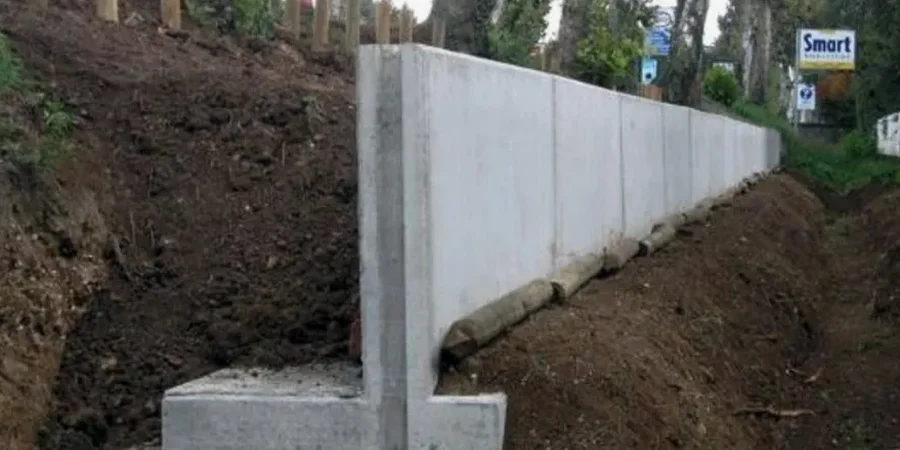
The range of projects requiring slope expertise spans multiple sectors. Residential hillside developments routinely need retaining wall design to create buildable pads while maintaining slope stability. Transportation infrastructure along State Highway 21 and Bogus Basin Road demands ongoing assessment of cut slopes and fill embankments. Municipal projects addressing stormwater conveyance often incorporate geocell design for slope reinforcement and erosion protection. Commercial developments near the Boise River Greenbelt require evaluation of riverbank stability and scour potential. Agricultural operations on the valley margins benefit from active/passive anchor design to stabilize terrace faces. Each project type presents distinct loading conditions, drainage considerations, and performance criteria that our integrated approach addresses through site-specific investigation and analysis.
Available services
Soil erosion analysis
→ Ver detalleSlope stability analysis
→ Ver detalleDebris flow analysis
→ Ver detalleFactor of safety (FS) calculation
→ Ver detalleGeocell design
→ Ver detalleActive/passive anchor design
→ Ver detalleSlope stabilization design
→ Ver detalleRetaining wall design
→ Ver detalleMSE (Mechanically Stabilized Earth) wall design
→ Ver detalleSheet pile wall design
→ Ver detalleLandslide assessment
→ Ver detalleCommon questions
What triggers a mandatory slope stability analysis in Boise?
Under Boise City Code Title 9 and the Hillside Development Ordinance, any proposed construction on slopes exceeding 25% grade requires a geotechnical report with slope stability analysis. Additionally, projects within 200 feet of a mapped landslide hazard zone or involving cuts and fills greater than 15 feet in height trigger mandatory evaluation. The Ada County Stormwater Manual also requires analysis when drainage alterations could affect slope equilibrium.
How do Boise's soil conditions affect slope design compared to other regions?
Boise's predominant loess soils present unique challenges due to their collapsible structure and high erosion potential. Unlike cohesive clay regions, our silty soils require careful moisture management and often necessitate reinforcement techniques like geocells or soil nailing. The interface between loess and underlying basalt bedrock creates preferential seepage paths that demand robust drainage design not always required in more homogeneous soil profiles.
What is the typical timeline for a slope stabilization project from investigation to completion?
A typical slope stabilization project in Boise spans 8 to 16 weeks, depending on complexity. Initial site investigation and subsurface exploration require 2 to 3 weeks, followed by 2 to 4 weeks for laboratory testing and analysis. Design development and regulatory review consume another 3 to 5 weeks, with construction lasting 4 to 8 weeks depending on the stabilization method selected and seasonal weather constraints.
Does homeowners insurance typically cover slope failures in Boise?
Standard homeowners insurance policies generally exclude earth movement and slope failures, including landslides and erosion-related damage. In Boise's hillside areas, property owners should consider difference-in-conditions policies or specialized landslide insurance. Some lenders require such coverage for properties in mapped hazard zones. A professional slope stability assessment can help determine your risk exposure and inform insurance decisions.