Road geotechnics is the foundational discipline that ensures transportation infrastructure in Boise performs safely, durably, and economically over its design life. This specialized field addresses the interaction between pavement structures and the underlying earth materials, encompassing everything from road subgrade design to the stability of adjacent slopes. In a region experiencing rapid population growth and expanding urban boundaries, the role of geotechnical engineering in road construction cannot be overstated. It mitigates risks associated with differential settlement, frost heave, and material degradation, directly influencing long-term maintenance costs and public safety for agencies like the Ada County Highway District (ACHD) and the Idaho Transportation Department (ITD).
The Boise area presents a unique geological setting shaped by the Boise Front foothills, the Snake River Plain, and historic Lake Bonneville flood deposits. Near-surface soils frequently consist of alluvial fan deposits, volcanic basalts, and significant layers of expansive clay and silty loess. These collapsible and moisture-sensitive soils pose substantial challenges for soil stabilization for roads. Without proper treatment, the cyclic wetting and drying typical of Treasure Valley's semi-arid climate can lead to severe pavement distress. Geotechnical investigations must carefully characterize these local formations to predict behavior under load and environmental flux, making site-specific analysis critical for any successful project.
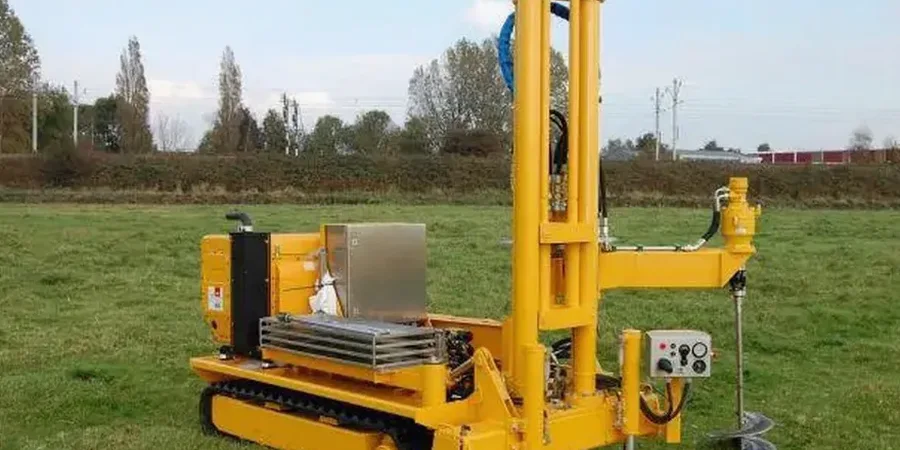
Design and construction in Boise are governed by a robust framework of national and local standards. The American Association of State Highway and Transportation Officials (AASHTO) Green Book provides the core geometric and structural design guidelines, while the AASHTO Manual for Subsurface Investigations and the Mechanistic-Empirical Pavement Design Guide (MEPDG) inform material characterization and structural analysis. Locally, ITD Standard Specifications for Highway Construction and ACHD supplemental standards dictate specific requirements for compaction, aggregate quality, and testing protocols. Adherence to these specifications is mandatory for public projects, ensuring that designs for flexible pavement design and rigid pavement design meet the region's performance criteria.
This category of geotechnical services is essential across a wide spectrum of projects, not just major freeways. It is critical for new residential subdivisions connecting to arterial networks, commercial site access roads, industrial park haul routes, and the rehabilitation of aging farm-to-market roads. Whether constructing a new embankment over compressible soils, evaluating an existing roadway for a capacity expansion, or diagnosing premature cracking in a collector street, a thorough geotechnical approach is required. Effective geotechnical road drainage integration is equally vital, preventing the saturation that undermines both pavement layers and the supporting earthwork. Ultimately, investing in comprehensive road geotechnics from the initial site investigation through construction quality assurance is the most effective strategy for delivering resilient, low-maintenance pavements that support Boise's continued vitality.
Common questions
What is road geotechnics and why is it critical for pavement performance?
Road geotechnics applies soil mechanics and geology to the design and construction of transportation earthworks. It is critical because the soil subgrade is the ultimate foundation for all pavement layers. Inadequate analysis can lead to differential settlement, frost heave in Boise's winter conditions, and moisture-induced weakening, causing premature cracking and rutting that drastically shortens a pavement's intended service life.
How do Boise's local soils impact road construction and long-term durability?
Boise's geology features expansive clays, volcanic basalts, and silty loess deposits from ancient Lake Bonneville. These soils are often moisture-sensitive, prone to volume changes with seasonal wetting and drying. This can exert destructive pressures on pavements. Proper identification and treatment, such as moisture conditioning or stabilization, are essential to create a non-reactive, stable working platform.
What are the key differences between flexible and rigid pavement design from a geotechnical perspective?
Geotechnically, flexible pavements distribute loads in a tapered manner to the subgrade, making subgrade strength and stiffness paramount to prevent rutting. Rigid pavements bridge minor subgrade weaknesses through slab action, but they are highly sensitive to voids caused by settlement or erosion. Therefore, a uniform, non-erosive, and stable subgrade is critical for both, but the failure mechanisms differ significantly.
When is a geotechnical investigation required for a road project in Boise?
A geotechnical investigation is required by ITD and ACHD for virtually all new public road construction, widening, or major rehabilitation projects. It is also necessary for private developments where roads will be dedicated to the public. The investigation scope must be sufficient to characterize subsurface conditions, evaluate cut and fill slopes, and provide design parameters for pavement thickness and soil treatment.